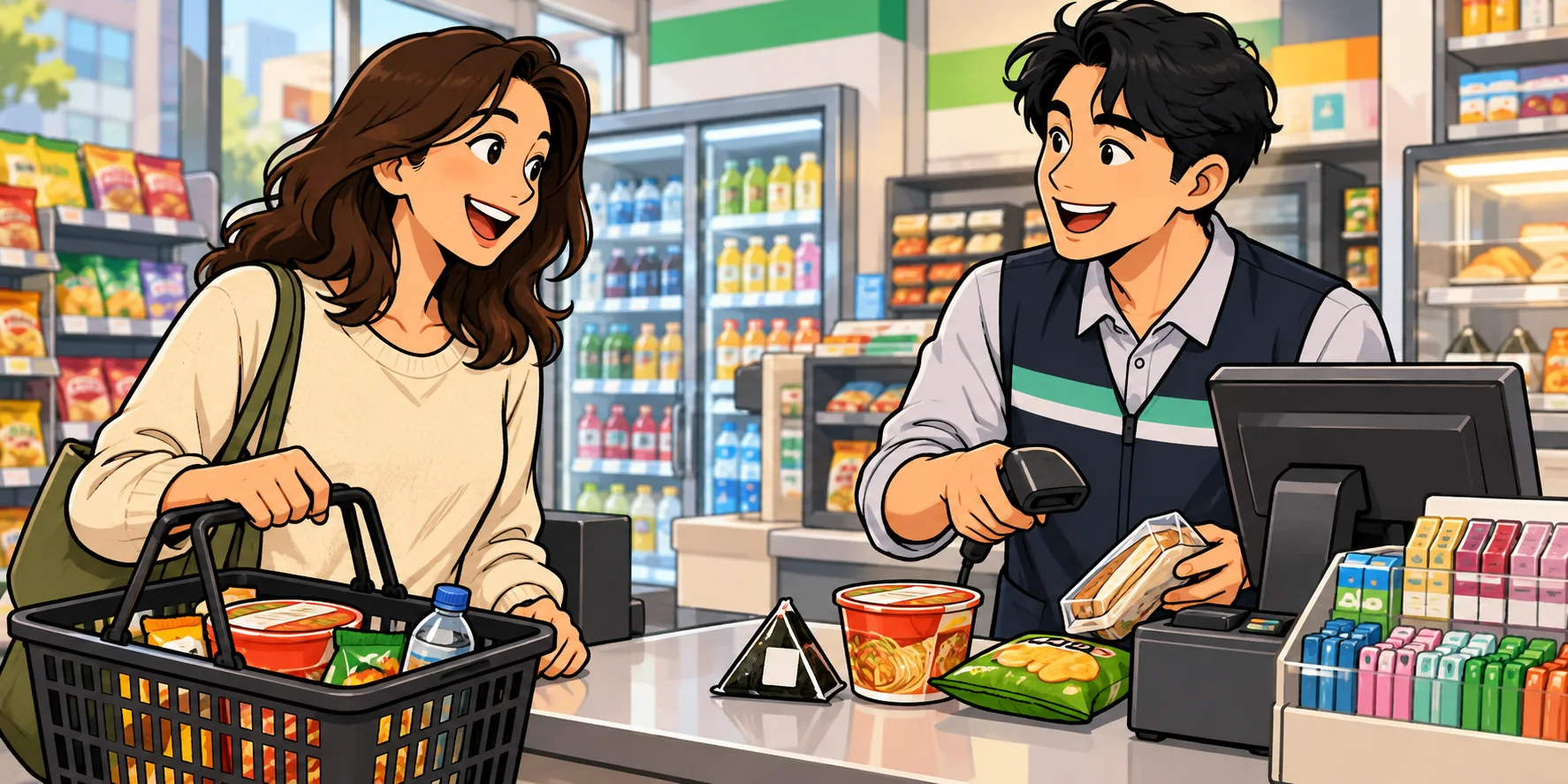
Convenience-store conversations are often brief. You may have chosen your snack already, but a question at the checkout can still catch you off guard. Prepare a few replies before you need them.
Asking for a bag
“봉투 주세요.” (bongtu juseyo) means “A bag, please.” A bag may cost extra; listen to the staff rather than assuming it is included. If you do not need one, “괜찮아요” can work as a polite refusal in response to an offer.
Talking about payment
“카드로 할게요.” (kadeuro halgeyo) means “I’ll pay by card.” The particle 로 identifies the method. This sentence states your choice; it does not guarantee that every card or payment method is accepted. Watch the terminal and follow the staff’s instructions.
The related everyday-conversation video below is a listening companion. Pause after a question and practice giving one of these short replies in your own voice.
Declining the receipt
“영수증은 괜찮아요.” (yeongsujeungeun gwaenchanayo) means you do not need the receipt. The same 괜찮아요 can express “It’s okay” or “No, thank you,” depending on what was offered. Context matters more than memorizing one fixed English translation.
Your practice task
Imagine buying a drink and a snack. Say whether you need a bag, how you will pay, and whether you want a receipt. Then write your three replies on the community board. You can change one choice tomorrow and reuse the rest of the conversation.